

Key takeaways
- Vermiculite attic insulation may be asbestos contaminated, especially if it looks like loose, pebble-like granules with shiny flakes.
- Asbestos exposure happens when asbestos-contaminated vermiculite is disturbed, and asbestos fibers become airborne; there is no known safe level of exposure to asbestos.
- Do not disturb vermiculite insulation or remove it as a diy project. Contact a licensed asbestos professional or a health and safety consultancy such as Advanced Health and Safety.
- If the material remains undisturbed in a sealed attic, the immediate risk is usually lower, but renovation, air sealing, wiring, or a bathroom fan project can change the health risk.
- This guide explains how to recognize vermiculite insulation, understand health risks, take safe next steps, and find specialist help in 2026.
What is vermiculite, and why was it used in attics?
Vermiculite is a naturally occurring mineral; more specifically, vermiculite is a naturally occurring mineral that expands when heated. When heated, vermiculite can expand 8-30 times its original size, creating a lightweight, odorless material with a high melting point that helps prevent flame spread and makes it fire resistant. For decades, builders used this pour-in product as attic insulation because its small flakes behaved almost like a fluid, filling irregular gaps between floor joists, around walls, and inside hollow masonry blocks.
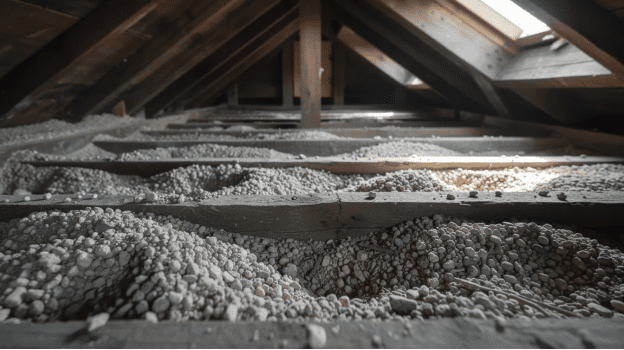
You may find vermiculite insulation as loose, pebble-like pieces that are light brown, gray, gold, or silver-gold. It often resembles mica, with shiny flakes and small accordion-like pieces, sometimes about cornflake size and occasionally close to an inch long. Vermiculite products range from attic insulation and wall cavity fill to lightweight concrete, gardening mixes, and industrial fireproofing. Modern vermiculite products that meet current standards are generally clean and non-toxic; the concern is older asbestos-contaminated vermiculite still sitting in many homes.
Much of the older vermiculite sold in the United States and Canada came from the Libby mine near Libby, Montana, which operated from 1919 to 1990. According to the Environmental Protection Agency, asbestos contamination risk is associated with the majority of vermiculite insulation installed in U.S. homes between 1919 and 1990.
How asbestos contamination became a problem
Many vermiculite deposits are naturally close to asbestos-bearing rock. That is how asbestos-contaminated vermiculite entered building materials from some mines. The vermiculite mine in Libby, Montana, was the source of over 70 percent of all vermiculite sold in the United States from 1919 to 1990, and it was contaminated with asbestos due to the presence of asbestos deposits at the site.
Libby material was sold widely, including as Zonolite attic insulation, and shipped across North America for use as attic insulation, wall fill, and masonry block fill. Because distribution records are incomplete and brands were sometimes blended, homeowners are always advised to assume older vermiculite contains asbestos unless testing and documentation prove otherwise.
The Libby mine was declared a public health emergency in 2009, being referred to as "the worst case of industrial poisoning of a community in U.S. history." By 2010, nearly 50% of screened residents in Libby, Montana, had been diagnosed with asbestos-related diseases, highlighting the severe impact of vermiculite contamination on the local population.
How does asbestos cause health problems?
Asbestos exposure is dangerous when microscopic fibers are inhaled or swallowed, usually after insulation is disturbed during remodeling, storage, or repair work. Asbestos fibers are very fine particles, often more than 1,000 times thinner than a human hair. These fine particles can stay in the air, travel deep into lung tissue, and remain there for years.
Exposure to asbestos is linked to serious health risks, including lung diseases such as asbestosis, lung cancer, and mesothelioma, with illness potentially manifesting decades after exposure. These asbestos-related diseases may take 10-40 years to appear, so a person may feel healthy today even after being exposed years ago.
There is no known safe level of asbestos exposure, and inhalation of airborne asbestos fibers poses the greatest health risk. Each added exposure can increase lifetime risk, especially for people who smoke. Low levels from intact material are different from dust clouds created when someone walks through, bags, vacuums, or shovels contaminated insulation.
How to recognize vermiculite attic insulation in your home
Visual clues can help you suspect vermiculite attic insulation, but they cannot confirm whether the material contains asbestos. To find vermiculite insulation, look for loose-fill granules on the attic floor between joists, in knee-wall spaces, or spilling near light fixtures, pipes, attic hatches, or a bathroom fan opening.
Vermiculite insulation can be identified by its shiny flakes and its resemblance to mica, and it is typically found in attics and walls regardless of when a home was built. It is usually light-brown, gray, or gold, with layered pieces that look like tiny expanded books. Do not dig into the material to "check." If you disturb it, you may release asbestos fibers and create potential exposure.
Old Zonolite bags, invoices, or property records can offer clues, but most houses have no packaging left. Agencies such as the EPA and state resources, including the Wisconsin DHS, generally advise caution with older loose-fill vermiculite.
Is vermiculite insulation safe if left in place?
The risk depends on whether the material is friable, how often it is disturbed, and whether the attic is sealed from living areas. The safest option for intact vermiculite insulation is to leave it undisturbed; disturbing it can release asbestos fibers into the air. If vermiculite attic insulation remains undisturbed behind drywall or air barriers, and the attic is rarely entered, the immediate asbestos exposure risk is reduced but not eliminated.
Any activity that stirs the material can raise airborne asbestos fibers: adding recessed lights, installing wiring, removing old insulation, air sealing, or using the attic to store things. If vermiculite insulation is exposed or spilling into living areas, immediate steps should be taken to seal the cracks to prevent exposure to asbestos fibers. Avoid sweeping, vacuuming, or moving the dust yourself.
Vermiculite insulation typically exhibits a thermal performance rating of roughly R-2.0 to R-2.4 per inch, which is lower than modern insulation materials. Modern alternatives to vermiculite for insulation include fiberglass, cellulose, and spray foam, which do not carry the same asbestos risks. Many traditional insulation methods, like fiberglass and cellulose, are now preferred over vermiculite due to health risks and higher thermal efficiency.

Health risks from asbestos-contaminated vermiculite
Asbestos-contaminated vermiculite can release asbestos fibers when disturbed, creating cumulative health problems that may not be obvious for decades. Common scenarios include a diy project to add attic insulation, cutting ceiling openings, removing loose material, or tradespeople working in cavities without precautions.
People at higher risk include construction workers, maintenance workers, families who have attempted large removals, and anyone repeatedly exposed to contaminated dust. If you have had significant exposure to asbestos-containing dust, discuss that history with a doctor, especially a pulmonologist. Early medical follow-up may help document exposure and manage disease if symptoms develop.
What to do if you find vermiculite insulation in your attic
Do not panic, but stop work immediately. Keep children, pets, and unnecessary visitors out of the attic. Avoid disturbing the material, close the hatch, and do not test vermiculite yourself unless a qualified professional instructs you how to do it safely.
Contact an asbestos consultant or an environmental health and safety firm such as Advanced Health and Safety. A proper assessment may include visual inspection, construction-date review, and source likelihood. Depending on the results, options may include managing the material in place or arranging for full abatement.
Tell every contractor before work begins, including insulation installers, electricians, HVAC technicians, plumbers, and roofers. A contractor who does not know vermiculite is present may accidentally disturb it and move fibers into the air.
Safe handling and removal: why professional help is critical
Homeowners should not bag, vacuum, or shovel suspected asbestos-contaminated vermiculite. If vermiculite insulation is disturbed, it can release asbestos fibers into the air, increasing the risk of inhalation and subsequent health issues.
For the removal of vermiculite insulation, it is strongly recommended to hire a licensed asbestos contractor who can safely remove the material and perform air monitoring. A qualified abatement contractor will use containment, negative air machines with HEPA filtration, respirators, disposable protective clothing, decontamination procedures, regulated waste disposal, and clearance checks before the space is deemed safe.
DIY removal can spread asbestos fibers through living areas and HVAC systems. It can also violate regulations, complicate insurance claims, and create problems when selling the house. Get written scopes, proof of licensing, insurance, training records, and recent vermiculite abatement references before hiring.

Costs, insurance, and assistance programs
Abatement costs vary in 2026 based on attic size, access, insulation depth, regional labor rates, and whether wiring or mechanical systems are in the way. Professional asbestos testing often ranges from a few hundred dollars to under $1,000, while full attic abatement can reach several thousand dollars or more.
Some owners may qualify for partial help through the Zonolite Attic Insulation Trust when the material is confirmed as Zonolite. Review your home insurance policy too, because asbestos abatement coverage varies and may depend on whether the issue is discovered after water, fire, or storm damage. Local weatherization programs may also offer financing or incentives for safe replacement insulation.
Working with Advanced Health and Safety
Advanced Health and Safety helps homeowners navigate vermiculite insulation and asbestos exposure concerns in a structured, compliant way. Locally owned and operated in Madison, Wisconsin, since 2000, Advanced Health and Safety brings more than 25 years of experience and is fully licensed, certified, and insured up to $7 million, with a spotless safety record.
The team can provide an initial consultation, help interpret visible attic conditions, and advise whether asbestos sampling or a full risk assessment is warranted.
Most importantly, the process is clear. You will understand the health risks, documentation needs, project timeline, and precautions before scheduling attic upgrades, mechanical work, or renovations that could disturb vermiculite insulation. If you are concerned about suspected asbestos-contaminated vermiculite, contact Advanced Health and Safety before the work begins.
Questions and answers about vermiculite insulation to crisis management
Can I briefly enter an attic that has vermiculite insulation?
Brief entry into an attic where material remains undisturbed is usually lower risk than prolonged work, but minimize it. Stay on boards or joists, do not kneel in insulation, do not sweep, and leave if you see dust. People with asthma or other respiratory issues should avoid entry.
Should I disclose the presence of vermiculite insulation to prospective buyers as part of my property documentation or corporate crisis management?
In many regions, sellers must disclose known environmental hazards, including suspected asbestos-contaminated vermiculite. Keep inspection reports, lab results, and professional opinions. Ask a local real-estate attorney or licensed agent about 2026 disclosure rules in your state or province.
Is vermiculite in potting soil as dangerous as attic insulation?
Modern horticultural vermiculite products are subject to safety controls and usually pose much lower health risks than older vermiculite attic insulation. Open bags gently, moisten dry mix to reduce dust, and work in ventilated areas, especially if you have lung diseases or respiratory concerns.
Can air purifiers or HVAC filters protect my family if we have vermiculite insulation?
HEPA purifiers and better HVAC filters can reduce general indoor particles, but they are not a substitute for asbestos management. If vermiculite is actively disturbed, consumer filtration cannot reliably protect your family from exposure to asbestos. Prevent disturbance and call professionals.
How do I choose a reputable asbestos contractor for vermiculite removal?
Verify current asbestos licenses, insurance, training, and references for vermiculite projects. Ask the contractor to explain containment, air monitoring, and disposal procedures in plain language. Consider involving Advanced Health and Safety for independent oversight or clearance support.
Conclusion
Vermiculite insulation is a lightweight, pourable mineral material used historically to insulate attics and walls, but older material may be contaminated with asbestos. If you have vermiculite insulation in your home, you should assume it may be contaminated with asbestos and take precautions to protect yourself and your family from exposure.
The safest next step is simple: avoid disturbing it, document what you see, and get qualified guidance before any attic work begins. Contact Advanced Health and Safety if you need help evaluating suspected vermiculite attic insulation or planning a safe path forward.
Call Advanced Health & Safety today@ 608-243-8466.